
Chapter 01: Abhyanga Snana and the story of Narakasura
It's Diwali season, one of India's biggest, brightest and loudest festivals, and we're all up to something special whether we celebrate it or not.
While most of the world knows the story behind Deepavali, thanks to the numerous literary and cinematic adaptations of Ramayana, I believe that not a lot of us know the story behind the other four days of this five day festival. (Did you know it's a five day festival?)
And to fix that, I bring to you a series where we discover the legends, the rationale and the why behind all the whats we do as a part of our culture.
Starting with Choti Diwali, aka Naraka Chaturdashi.
Now we all know what triggered this post — Abhyanga Snana, but do we know the why and the what around the ritual?
The Story of Narakasura
That's right. That's why it's called Naraka Chaturdashi.
Anyway, so the story goes something like this —
Long long time ago, there was a demon king, born to the goddess of earth, Bhudevi (Bhu meaning Earth, Devi meaning Goddess) and Vishnu's incarnation, Varaha.
His name was Narakasura, and he ruled over the kingdom of Pragjyotishapura. Born to two divine beings, Narakasura could not handle his divinity with grace. As his power grew, he became arrogant and tyrannical. His blind power trip became a threat to the three realms.
He defeated the heavenly gods and stole their mother's earrings (which, honestly, why). He imprisoned sixteen thousand women (and I need you to remember this for later), he seized the kingdom of others and subjected people to cruelty. He was so powerful, even gods couldn't stop his tyranny.
So naturally, they approached the one and only, the solution to all world problems — Krishna.
Now, to tell you the truth, if I was Krishna (or Vishnu for that matter), I'd have given up on gods, because how do you manage to get into trouble like this EVERY. SINGLE. TIME?
And I say this because of one teeny tiny detail — Narakasura was given a boon by Brahma. One that guaranteed his invincibility and immortality.
He could only be killed by his own mother, Bhudevi.
Yeah, I'd also want a moment to adjust to that. Take your time.
Honestly, let's all just be happy, at least it wasn't Mahadev this time. SMH. Gods, I tell you.
Anyway, Krishna came up with a plan. He would go to battle against Narakasura, with his wife — Satyabhama (yay, girl power).
Satyabhama was an incarnation of Bhudevi (yes. Krishna being an incarnation of Vishnu means they were technically going to fight their own child).
During the battle, Krishna was struck by Narakasura's weapon and pretended to faint. Seeing this, Satyabhama took up a bow and killed Narakasura (again, girl power yay). Leave it to Krishna to always give villains a taste of their own medicine (and be a feminist about it too).
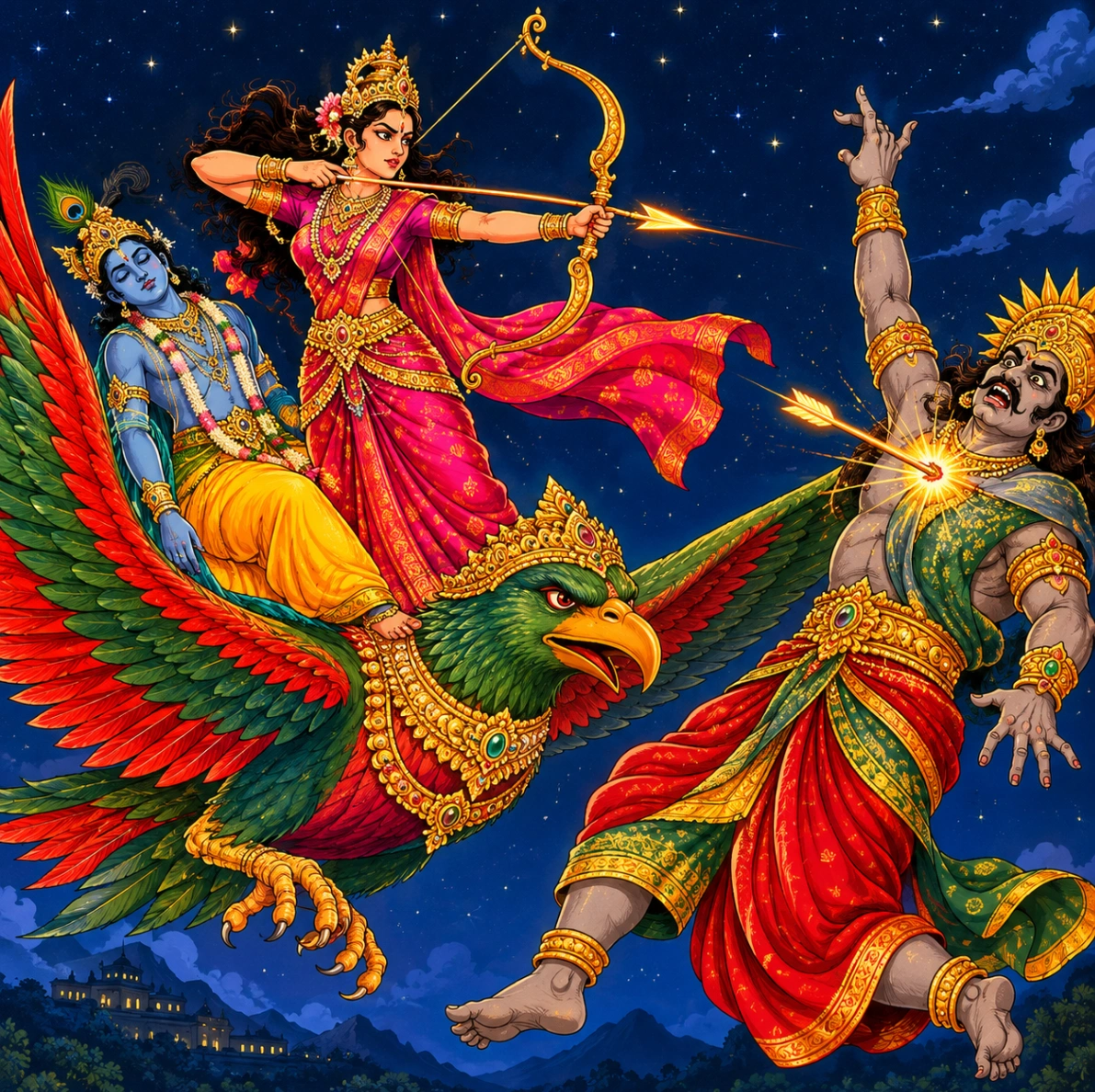
But the story doesn't end there.
Narakasura realises all his crimes as he was about to succumb to his injuries. He requested Krishna that his death be celebrated as a day of joy rather than sorrow. Krishna happily granted that wish (I mean, at least he ain't granting immortality to just anyone).
And thus began the celebration of Naraka Chaturdashi, also known as Choti Diwali. I bet you didn't know it wasn't just a gap day between Dhanteras and Deepavali.
The Aftermath
After his victory, Krishna freed the sixteen thousand women that Narakasura had imprisoned. However, this was a time when women were not necessarily considered humans.
These women had lived in a man's captivity, and they knew the society would reject them. They feared not having a respectable future after going through what happened to them. They requested Krishna for protection.
Hence, Krishna accepted them as his wives, giving them social recognition, dignity and protection from societal ostracism.
The Bhagavata Purana describes him manifesting himself in separate forms so that each wife experienced him as present in her own household.
The Victory
Having defeated the Narakasura, and saved a lot of lives, Krishna returned home. Tired and covered in blood and grime from the war. He took an oil bath before sunrise to cleanse himself.
As a result, the ritual of Abhyanga Snana was born. It became associated with Naraka Chaturdashi, commemorating the victory over Narakasura
People believe the bath spiritually cleanses them, takes off the negativity and the weight their soul is carrying. It also acquired a deeper spiritual meaning: cleansing oneself of negativity, impurities, ego and the darkness within.
The Ritua
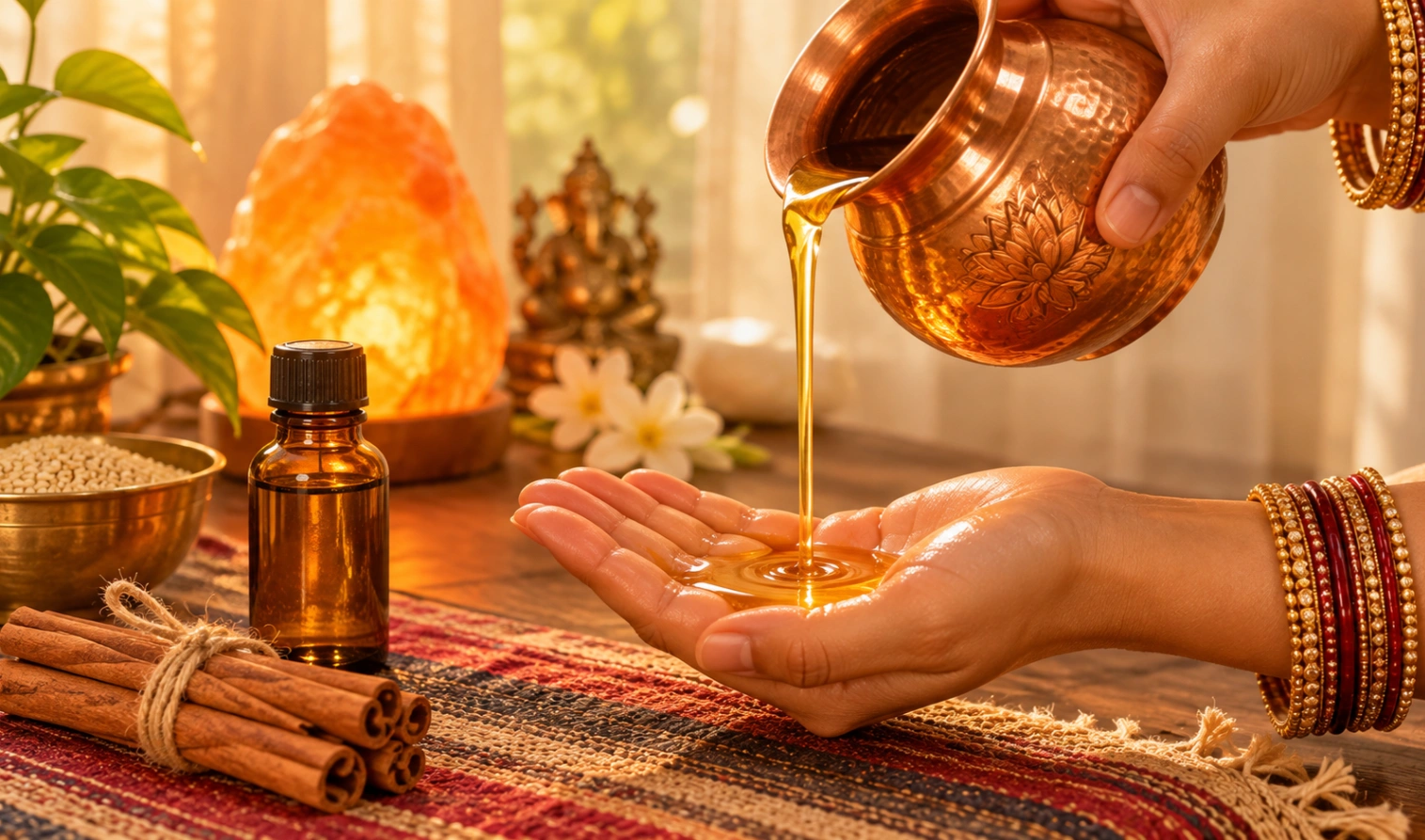
Early in the morning, before the sunrise, people soak and massage themselves with warm oil. It represents nourishment, purification and auspiciousness.
Depending on where you're from, the oil might differ. The north side of the country uses mustard oil, some southern states use coconut oil, but the most widely accepted and used oil for the Abhyanga Snana is sesame oil.
You apply the oil on the face, head and body and keep it for 15 to 20 minutes.
We don't need to reaffirm the benefits of soaking in oil, now do we.
The next step is to apply an Ubtan. An ubtan is an Ayurvedic treasure that our ancestors used to maintain their beauty game. If you'd like to know more about it, I have a whole other post about Ubtan and their significance in Indian skincare. It's linked right here.
Share this post